
Course Outline
A Sense of Place: Understanding the Landscapes of San Painters of the Cederberg
Archaeology Department, University of Cape Town
Instruction
Emeritus Professor John Parkington
Course Summary
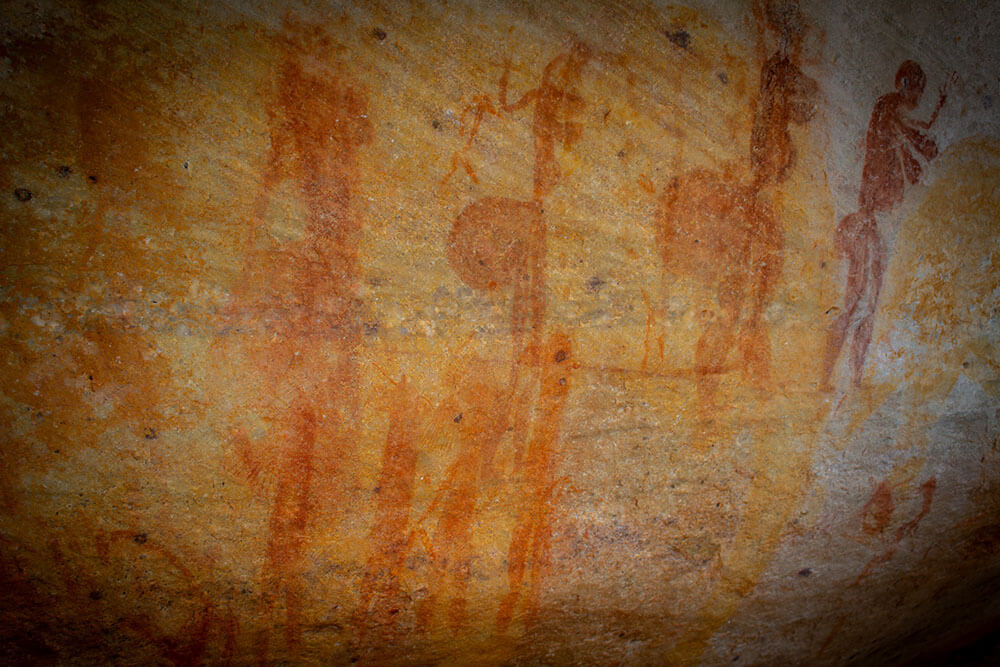
The introductory sessions will be held in the various laboratories and seminar spaces of the Archaeology Department at UCT and at the display venues of Iziko Museum and ! Khwa ttu. Instruction and discussions will focus on the rock art of southern San people, the First People of southern Africa, and perhaps the world, and the world view that underlies these images. Through a historical overview of changing views of San motives and motifs, we will approach an understanding of the images of human and animal figures from the perspective of the painters and their contemporary viewers. Recent San ethnographies, nineteenth century ethnohistorical records and a survey of twentieth century accounts of the ontological world views of hunter-gatherer communities from across the world help us understand a perspective on image making that might have been dramatically different from that of most recent interpretations of this ‘art’.
After these preparatory sessions we leave Cape Town to spend time in the field where we encounter, record and map the paintings in the drainages of the Brandewyn and Boontjieskloof streams, tributaries of the Doring and ultimately the Olifants rivers en route to the Atlantic. Our perspective is essentially phenomenological: our working assumption is that the hunter gatherer painters, people known through the early traveller accounts of this area in the seventeenth century AD as Soaqua, were archiving wisdom in the cumulative painted corpus, by repeatedly emphasising themes that underpinned their values, their social practices and their ontological understanding of ‘who they were’. ‘Places’ and ‘landscapes’ were marked and served to define the identities and belongings of hunting and gathering groups in ways quite similar to and probably alongside the stories recorded among other North American, Australian and Asian groups. The nineteenth century stories from the Bleek and Lloyd record, themselves from an engraved rather than painted landscape, support this interpretation.
Practical Outcomes Include
- an understanding of the history of interpretations of San paintings, almost wholly by non-San ‘experts’ under a variety of influences
- an attempt to define San perceptions of their world and their place in it through painted, engraved, narrative and mythological expressions across southern Africa
- an experience of practical site survey and image recording under guidance from professionals in both field archaeology and geomatics
- an introduction to drone capture of painted localities in a topography replete with painted sites
- an awareness of the potential of photographic enhancement for improving the visibility and therefore accessibility of residual painted details
- an involvement in the process of capturing the integration of topographic detail and painted imagery into an understanding of San landscape and place creation.
Course Objectives
- develop an understanding of a phenomenological approach to the hunter-gatherer creation of ‘lived landscape’ through both literature and hands-on practical applications
- provide an opportunity for students to become experienced in finding, recording and mapping archaeological sites, especially rock art sites
- promote awareness of the potentials of drone recording and other geomatic technologies for understanding ancient landscapes
- explore a view of the stone age archaeological record as an integrated mapping of both the artefactual as well as the rock art potentials of pre-colonial domestic sites.

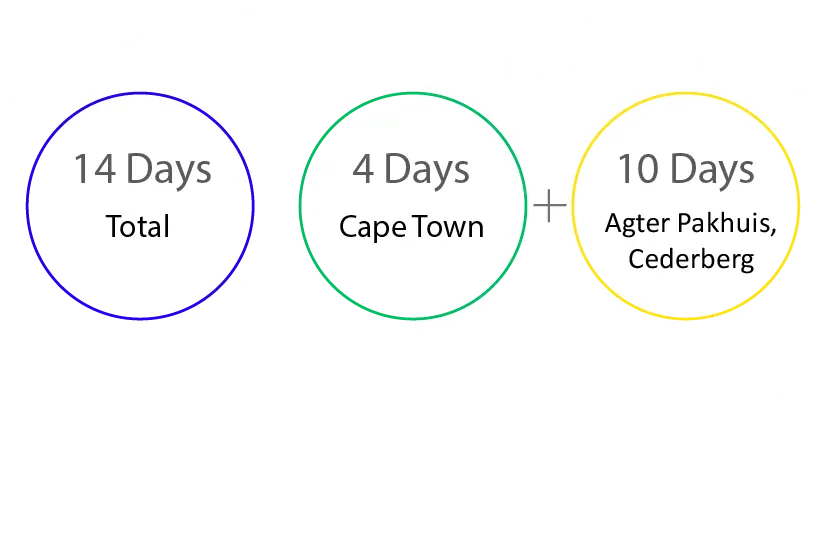
Four days lab and lecture room instruction, details subject to rescheduling.
Day 1 at UCT (2 sessions, morning and afternoon). A history of rock art research and San ethnography.

Day 2 at Iziko and Khwa ttu (2 sessions, morning and afternoon). Displaying and explaining San material culture, San expressive culture and rock art.

Day 3 at UCT laboratories, Jagger Library, Michaelis (2 sessions, morning and afternoon). Rock paintings, rock engravings and San storytelling.

Day 4 at UCT laboratories and field (2 sessions, morning and afternoon). An introduction to digital recording of imagery, sites and landscapes.

10 days field-based study, details subject to rescheduling.

Day 5 Travel to Agter Pakhuis field area, first view of the painted landscape and field conditions.

Day 6, 7 and 8 Site recording techniques and accumulation of field observations, photographs and digital imagery.

Day 9 and 10 Visit to coast to visit and map other kinds of sites, including shell middens.

Days 11, 12 and 13 Drone flying, topographic mapping and integration.

Day 14 Return to Cape Town via sites in the Olifants River Valley.
Reading List
Reading lists and access to them will be allocated to all registered students immediately prior to the beginning of the course, and will include
Keith Basso 1996. Wisdom Sits in Places: Landscape and Language among the Western Apache. Albuquerque. University of New Mexico Press
Calvin Martin (ed) 1987. The American Indian and the Problem of History. New York and Oxford. Oxford University Press
John Parkington and Andrew Paterson 2021. Cloaks and Torsos: image recognition, ethnography and male initiation events in the rock art of the Western Cape. Azania: Archaeological Research in Africa 56(4): 463-481.
John Parkington and Joe Alfers 2023. Entangled Lives, Relational Ontology and Rock Paintings: Elephant and Human Figures in the Rock Art of the Western Cape, South Africa. Southern African Field Archaeology 17: article 1228.
DOI: https://doi.org/10.36615/safa.17.1228.2022
Method of Instruction
Face to face lectures, interactive seminars and hands on practical involvements at various UCT and associated display venues.
Evaluation
The presentation of the students field and lab notebook, alongside an evaluation of the learner’s participation in joint applications in both field and laboratory will form the basis of the final evaluation.
WHO SHOULD ATTEND?
This very hands on and exploratory course should interest students with an ongoing or emergent interest in the history of rock art research in southern Africa and the increasing involvement of technological advances in the recording, mapping and display of painted landscapes.
Breakdown
Trip details- A Complimentary Welcome Function, get to know the instructors and fellow students
- Accomodation & Breakfast for 14 Nights (arrive on a Saturday/depart on a Saturday),
- Associated Excursions Transport Costs (including entrance fees)
- All meals breakfast, lunch and dinner in the field
- Students Responsible for own lunch and dinner only when in Cape Town( i.e 4 days)
- Students Responsible for own drinks in Field